
The Dynamic World of Pathogen Transmission in Bathrooms
The first Healthy Buildings Network seminar of 2025 brought together two leading experts in the field of environmental microbiology and hygiene to explore a topic that affects every building worldwide, toilet hygiene and pathogen transmission. Prof. Chuck Gerba from the University of Arizona and Dr. Khalid Ijaz from Reckitt Benckiser shared fascinating insights into how pathogens move through our built environments, with a special focus on bathrooms and toilets.
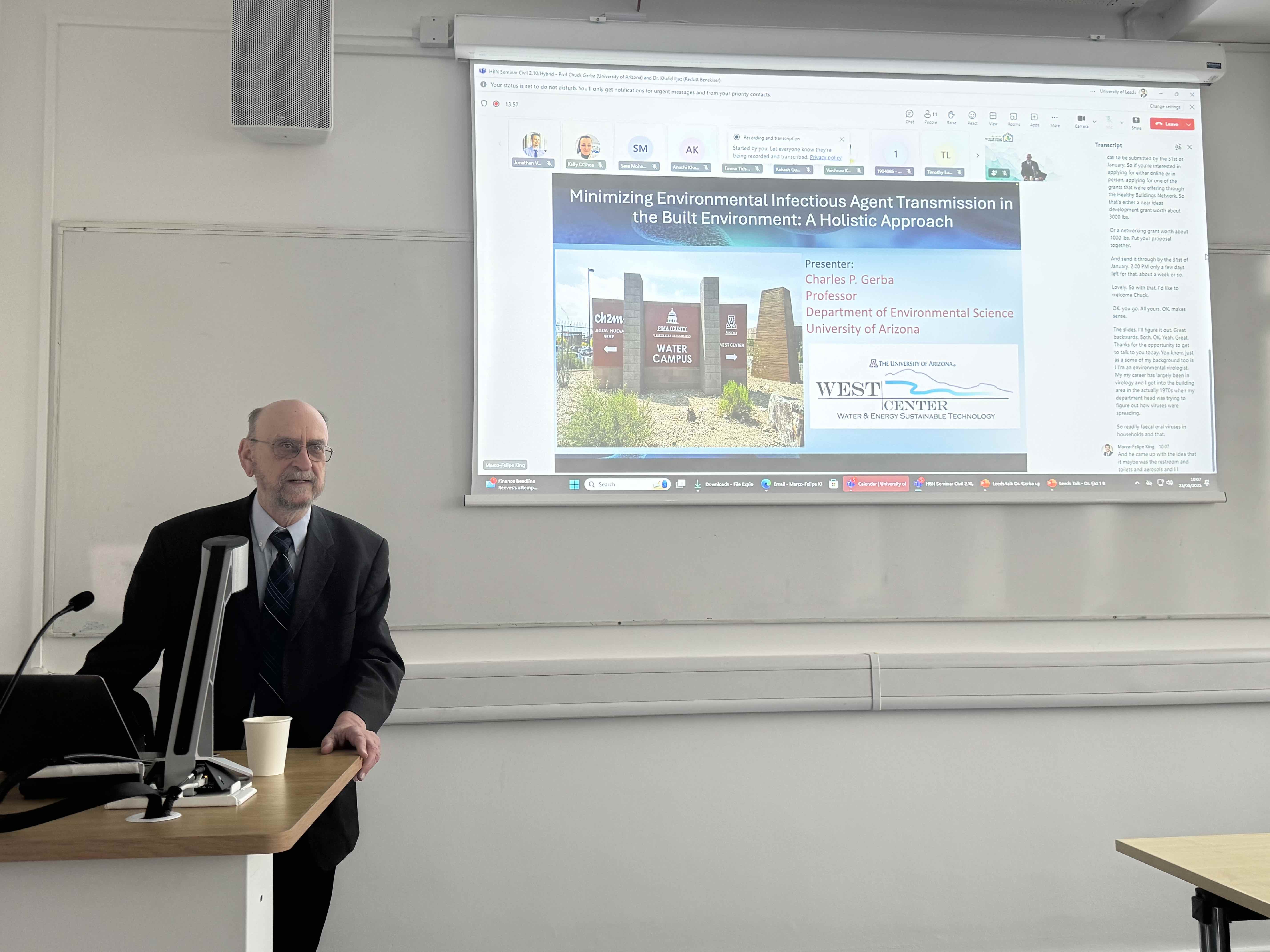
Environmental Virologist, University of Arizona
Prof. Gerba is a renowned environmental virologist with decades of experience studying the transmission of viruses in indoor environments. His pioneering work on surface contamination and bathroom hygiene has reshaped our understanding of pathogen transmission.
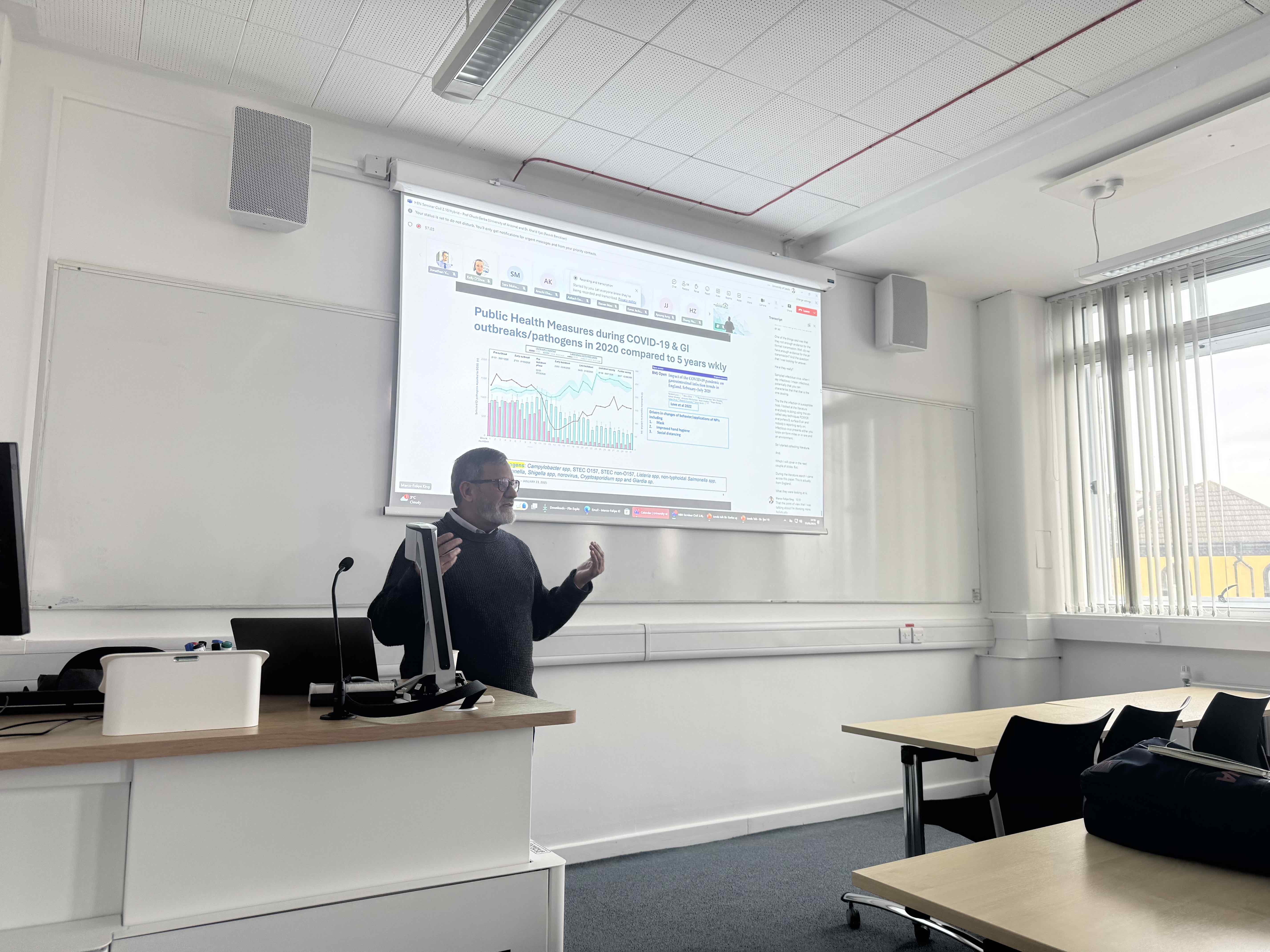
Microbiology Expert, Reckitt Benckiser
Dr. Ijaz specialises in aerobiology and public health, bringing both academic expertise and industry experience to his research on pathogen control. His work focuses on developing effective interventions to break the chain of infection transmission.
A central theme from both speakers was that pathogen transmission is not static but highly dynamic. As Dr. Ijaz emphasised, "It's not either/or, it's dynamic interdependent." Microorganisms move continuously between surfaces and air in what he called a "surface contamination network."
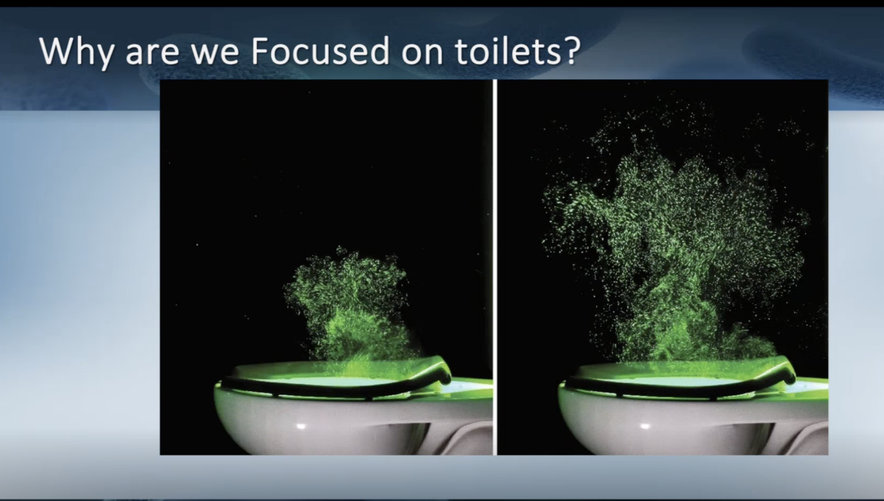
Prof. Gerba demonstrated this dynamic through his research on toilet plumes - the aerosols generated when toilets are flushed. His team used viral tracers similar to norovirus to track contamination patterns:
Healthier Bathrooms = Healthier Buildings
Source: Healthy Buildings Network Seminar, Leeds, January 2025
When it comes to transmission, the air-surface back to air is a dynamic process and they are interdependent. One cannot put just hands, just surfaces, just air. They're all related when it comes to transmission.
Dr. Khalid Ijaz
Reckitt Benckiser
Their findings challenge common assumptions about bathroom hygiene:
Dr. Ijaz reinforced these findings by demonstrating that pathogens exist in a continuous cycle between air and surfaces. His research showed that walking across contaminated floors, vacuuming, or even sitting on soft surfaces can resuspend settled viruses back into the air.
One of the most practical insights from the seminar came from Prof. Gerba's studies on optimal cleaning frequency. Counter to intuition, daily cleaning wasn't necessarily best. His research found:
"Twice a week it turned out to be was a good idea to clean it if you want to do the maximum benefit of your product," Prof. Gerba explained. This cleaning frequency achieved approximately 99% risk reduction when using appropriate disinfection products.
Continuous pathogen exchange between surfaces and air
Surface cleaning alone insufficient for complete protection
Source: Healthy Buildings Network Seminar, Leeds, January 2025
Exploring how data analytics can transform housing services and improve tenant outcomes.
Strategies for prevention, remediation, and policy changes to combat damp and mould in residential properties.
How academic collaborations are helping to solve real-world housing challenges.