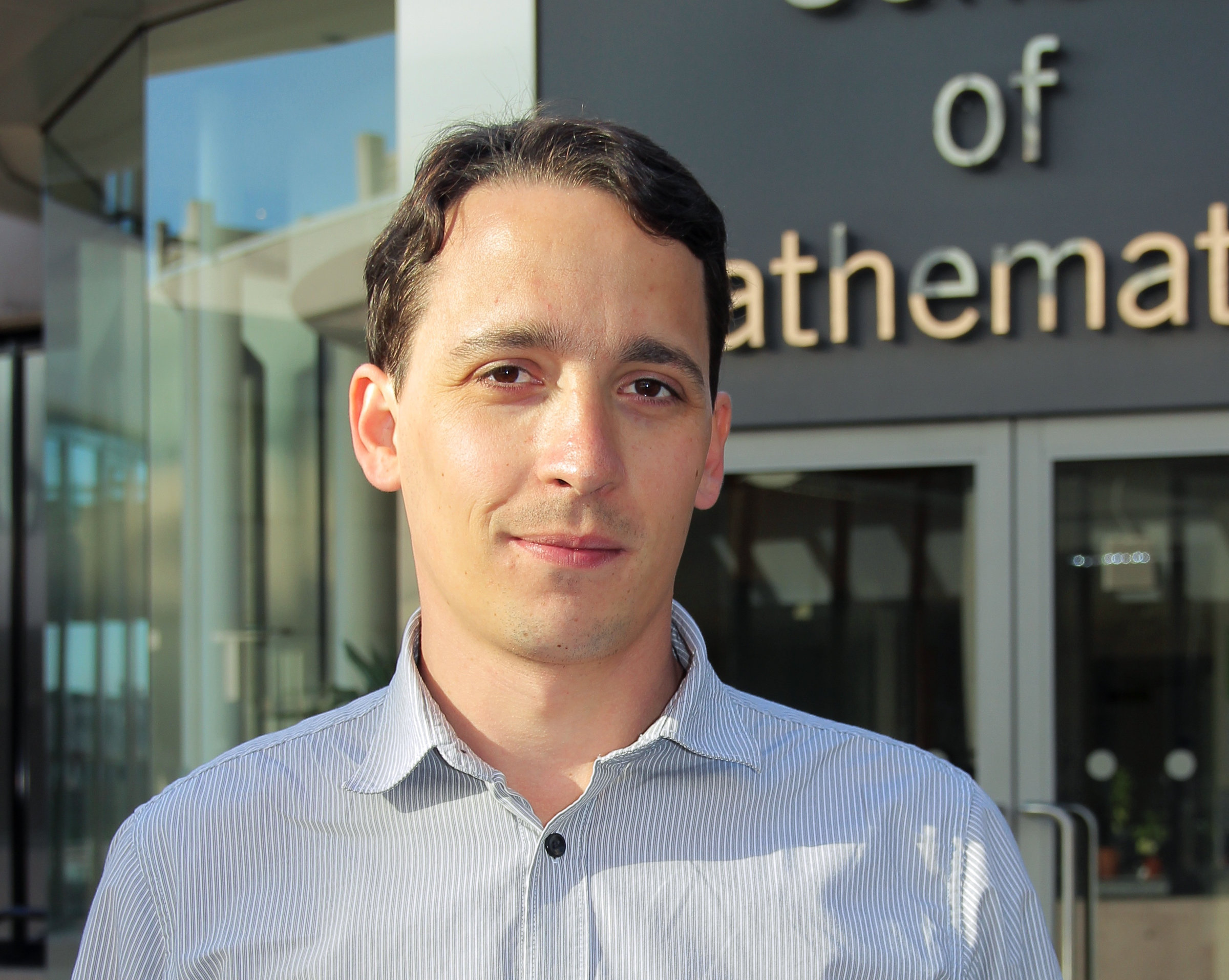

Martín López-García
Professor of Mathematical Biology in the School of Mathematics, University of Leeds. He builds mathematical models of how infection moves through indoor spaces, and co-founded this network to put that work in front of the people who design and run buildings.
What Martín does in the network
Martín is one of three directors who set the network's direction, decide what it funds and keep it honest about whether the research is reaching anyone outside the university.
His own discipline is the one most people are surprised to find in a buildings network. He develops stochastic models of how bacteria and viruses move between people in enclosed spaces, including hospital wards and public transport. The practical value is that a model lets you test a change, say a different ventilation rate or a different occupancy pattern, before anyone spends money building it. That is the bridge he brings: a way of putting numbers on decisions that are otherwise made on intuition.
The research behind it
His published work sits where mathematical epidemiology meets the built environment. Two of the papers below are joint work with Marco-Felipe King, which is roughly how this network started.
Selected work
-
The Wells-Riley model revisited II: parameter uncertainty and population heterogeneity
Risk Analysis, 2026. With Marco-Felipe King and Catherine Noakes.The Wells-Riley equation is the standard tool for estimating airborne infection risk in a room. This paper asks how far you should trust it once the uncertainty in its inputs, and the variation between people, are taken seriously.
-
A quantitative microbial risk assessment approach to estimate exposure to SARS-CoV-2 on a bus
Journal of Transport and Health, 2024. With Marco-Felipe King.Puts numbers on exposure inside a real enclosed space, and shows how ventilation and how many people are aboard change the answer.
-
The reproduction number and its probability distribution for stochastic viral dynamics
Journal of the Royal Society Interface, 2024.The underlying theory. Treating the reproduction number as a distribution rather than a single number is what makes the applied work defensible.
-
Mechanistic within-host mathematical model of inhalational anthrax
PLoS Computational Biology, 2025.The same machinery turned on a single body rather than a room, which is where the dose and response assumptions used in risk assessment come from.
The full publication list is on matml.github.io.
Ask Martín about
- Modelling how infection spreads indoors, and what the models can and cannot tell you
- Infection risk in hospitals and other healthcare settings
- How ventilation and occupancy choices change who gets ill
- Quantitative microbial risk assessment, and where its assumptions come from
- Turning quantitative evidence into building design and operation decisions
- Why a mathematician ended up working on buildings
In the network
-
Co-founded the network, summer 2024
Started with Marco-Felipe King and Irene Mussio as a Horizons Challenge Network at the University of Leeds. See the full story.
-
Co-editor, UKIEG 2025 Book of Abstracts
Edited with Marco-Felipe King and Irene Mussio, published with ISBN 978-1-914241-91-8. View the publication.
-
Chaired the ECR funded projects session, HBN Showcase 2026
Five early-career talks at the network's two-year showcase. See the programme.
-
Interview, April 2025
On the route from mathematical biology to buildings, and where he wants the network to go. Read the interview.
For press and comms
Approved copy you can lift straight into a programme, a press release or an event listing.
Name and style
- Full name
- Martín López-García
- Accents on the i in Martín, and on the o and i in López-García. The surname is hyphenated.
- Later mentions
- López-García
- Not "García" alone.
- Title
- Professor of Mathematical Biology
- School of Mathematics, University of Leeds.
- Network role
- Co-Founder and Director
- Healthy Buildings Network Leeds.
One line
Martín López-García is Professor of Mathematical Biology at the University of Leeds and a co-founder and director of the Healthy Buildings Network Leeds.
Fifty words
Martín López-García is Professor of Mathematical Biology at the University of Leeds and a co-founder and director of the Healthy Buildings Network Leeds. He builds stochastic models of how bacteria and viruses spread indoors, work that connects mathematical epidemiology with the design and operation of real buildings.
Hundred words
Martín López-García is Professor of Mathematical Biology at the University of Leeds and a co-founder and director of the Healthy Buildings Network Leeds. His research develops stochastic models of infection transmission in indoor environments, including hospitals and public transport, so that interventions can be tested before they are built. He co-founded the network in 2024 to connect quantitative modelling with the people who design, run and live in buildings. He co-edited the UKIEG 2025 Book of Abstracts and chairs sessions across the network's seminar and showcase programme.
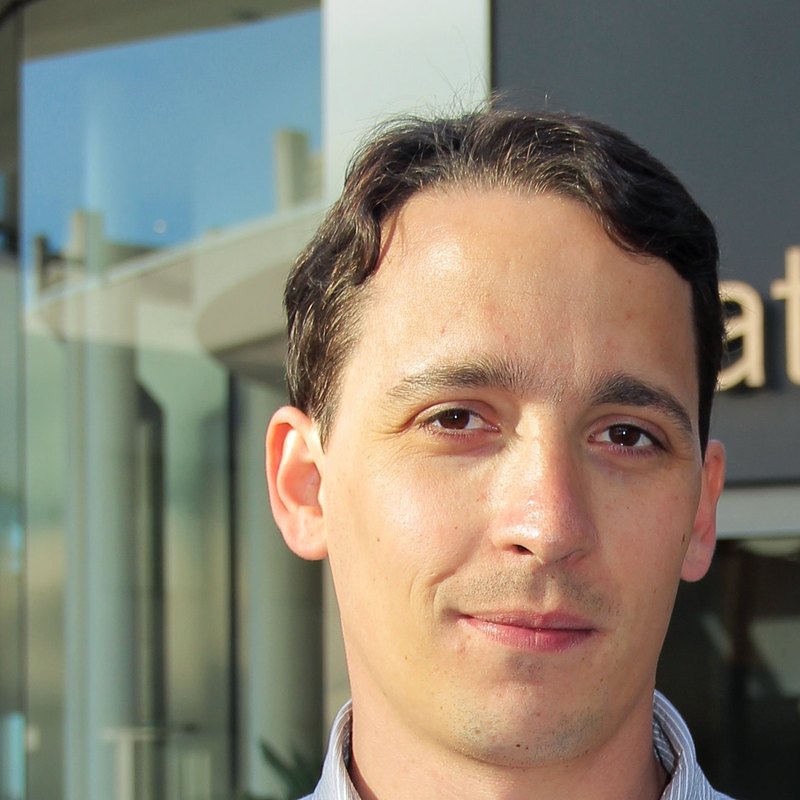
Headshot
Cleared for use in network and partner communications. Please credit the Healthy Buildings Network Leeds where a credit line is used.
Download high resolution (2400px)