How a house renovation, a decade of public engagement, and a lot of curiosity led me to ask: do we actually know if buildings work for the people inside them?
When I applied for funding from HBN last year, I didn't expect to hear good news. I had used the deadline as a way to pressure myself into getting all my scattered thoughts onto paper in a semi-coherent way.
Let me explain. I'm not an engineer by training—I'm a scientist with a broad background. For the past decade, my day job has been about normalising the idea that researchers engage with communities and the public to make their research better.
"Nothing changes if you don't talk to people, build rapport, and create trusted relationships."
People are the key in every form of engagement—whether it's public, policy, stakeholder, or business. And it starts with you: how you communicate, how you show empathy, how you show up for others.
These are the skills some call 'soft.' I call them 'alpha skills.' They're often taken for granted—but they shouldn't be. Because they're hard graft. They're what make collaboration possible, and they're what turn ideas into impact.
Communication. Empathy. Showing up for others. Building trust one conversation at a time. These aren't peripheral to research—they're central to making it matter.
My interest in buildings and their effects on people started after my house renovation. When we moved back in after six months, I felt something I can only describe as a visceral response to space. Yes, there was relief that the work was over, but that didn't fully explain what I felt.
It got me thinking: how do humans respond to space?
What happens if we live in places that are cramped, dark, with no view into the distance?
What about environments filled with light, space, and green views?
Research backs this up: according to Ulrich (1984), hospital patients recover faster when they have a view of greenery.
Science, 224, doi: 10.1126/science.6143402
View Publication →That discovery led me into a fascinating body of literature on psycho-physical wellbeing. Most of it, however, focused on comfort and safety. I was searching for something deeper—the sensory and emotional relationship between people and space.
Then it hit me: this was familiar territory. As a neuroscientist, I used psychophysics to study how we respond to physical stimuli—faces, natural scenes, color, motion, even gradients that convey spatial information. What I thought was a journey far from my expertise turned out to be right at its core.
I kept searching for frameworks that consider sensory, perceptual, and emotional experiences in buildings—ways to design spaces that truly support health and wellbeing. I didn't find much.
Instead, I found checklists: natural materials, fruit bowls in offices, and scorecard systems like BREEAM or LEED. These assume you can add credits linearly—ample bike storage compensates for limited windows.
"Really? Bike racks make up for no natural light?"
That led me to ask: how do we know if a building actually delivers what it promises beyond standing up and keeping the rain out?
That's when I discovered Post Occupancy Evaluation (POE)—a way to assess whether buildings meet their intended goals for the people who use them.
Turns out that while it is all very sensible on paper, it's not necessarily happening in real life. Why not? The systems-person in me thinks of the lost opportunity to learn, to improve, to regulate the system!
When I first sat down to write the application about POE, I knew one thing: building a successful project means different things to different people. With so many voices involved from start to finish, success is never one-dimensional.
So, I set out to connect with people who have a stake in the building process. I started with my own network, asked for referrals, and began building new relationships—earning trust along the way. The generosity of support was overwhelming. One conversation led to another, and soon I was speaking with people across Leeds, all connected to building in some way.
Balancing this with my main job hasn't been easy. There's plenty of core work that still needs to get done. But every conversation reinvigorates me and reminds me why this matters.
"I'm not just chasing a random idea—people I talk to confirm my hunches and questions. That's personally rewarding because it shows you don't need to be a subject matter expert; you just need curiosity, commitment, and care."
Creating space for people to think, listen, and learn together is where real progress happens.
You don't need to be a subject matter expert. Curiosity, commitment, and care will get you far.
If we're not evaluating buildings after people move in, we're missing the chance to learn and improve.
My timeline has slipped, but I'm confident I'll deliver the outcome I'm aiming for. Because this is about more than buildings—it's about collaboration and engaging with people to move things forward.
The generous support I've received from strangers-turned-collaborators has been overwhelming. Every conversation confirms that this question—how do we know if buildings actually work for people?—resonates across disciplines and sectors.
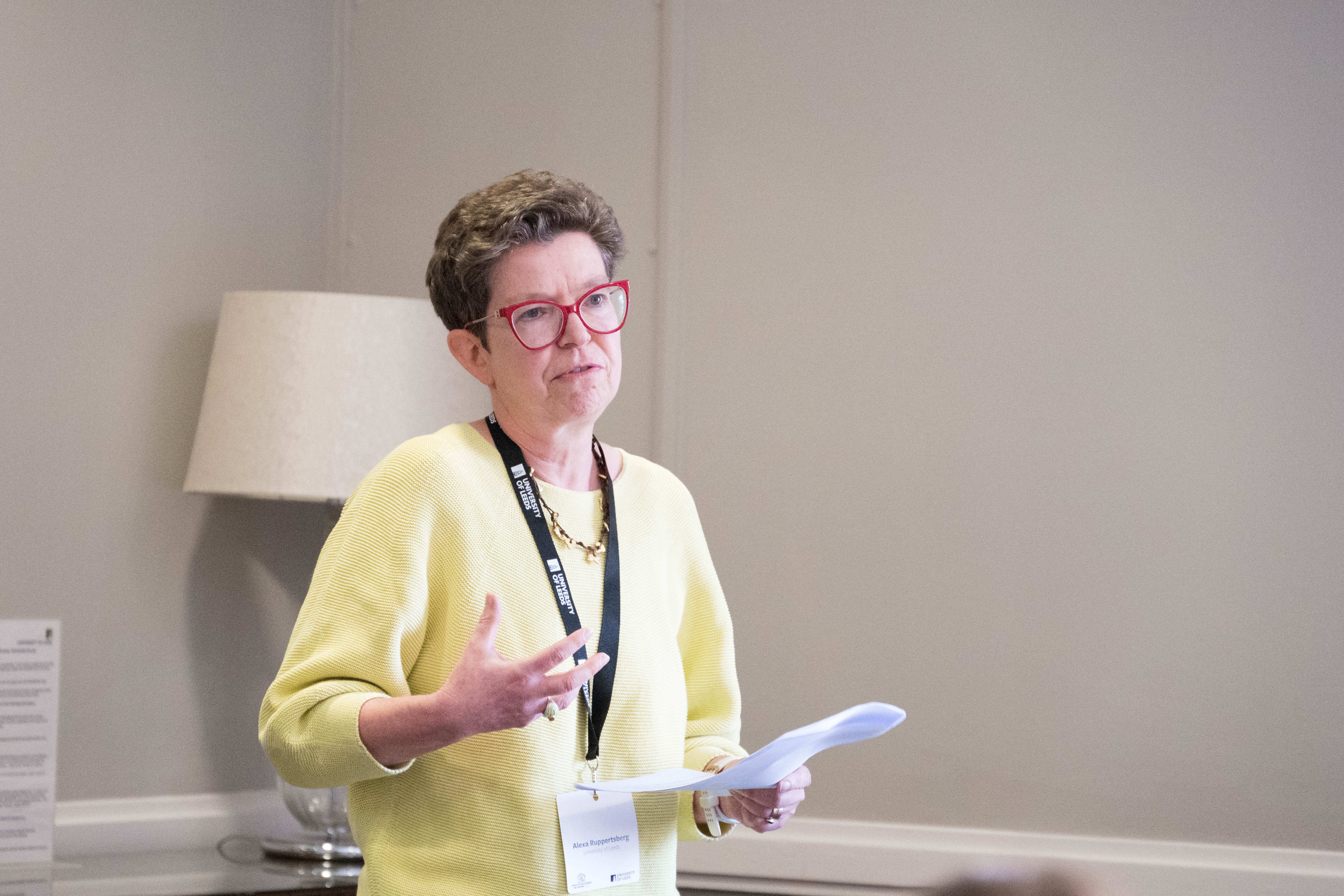
Alexa is a neuroscientist and public engagement lead at the University of Leeds. Her HBN pump-priming project explores Post Occupancy Evaluation and the human experience of buildings. Her background spans neuroscience, psychophysics, and a decade of helping researchers engage meaningfully with communities.
View Alexa's LinkedIn Profile →